

Building an Islamic Home: The First Fortress of Iman
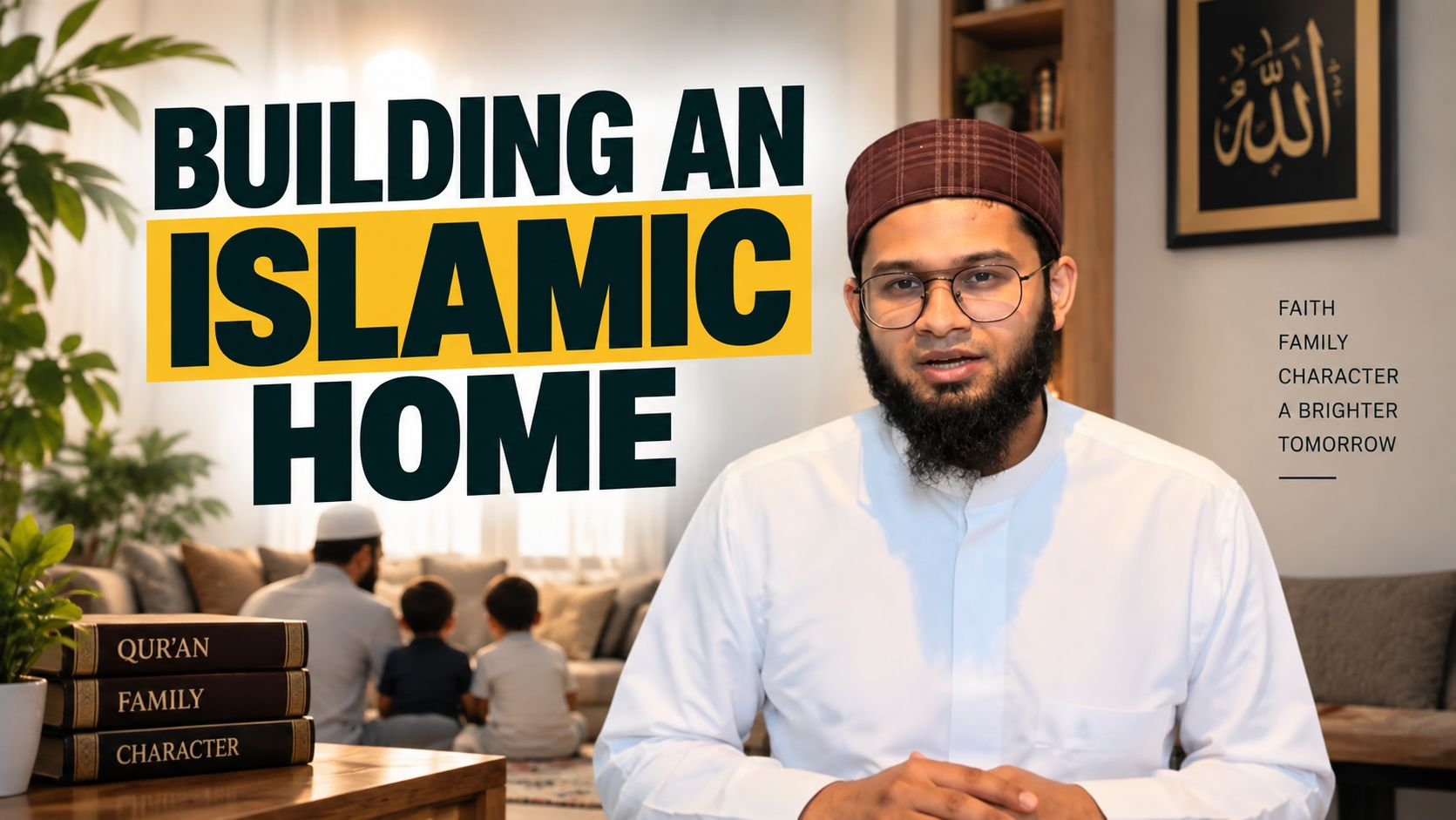
Alhamdulillah, September has started — a season of new routines, new school years, and new intakes at our local madaris. It felt like the right moment to reflect on something every one of us carries responsibility for, whether we're conscious of it or not: the fortress of iman within our own homes.
There are two fortresses that protect our families' iman. The first is an Islamic home. The second is the maktab and madrasa system — sending our children to be nurtured by people of knowledge, people who love Allah and the sunnah of the Prophet sallallahu alaihi wasallam. This piece is about the first. (We'll come to the second in Part 2.)
Save Yourselves and Your Families
Allah says in the Qur'an:
“O you who believe, save yourselves and your families from a Fire...” (Surah At-Tahrim, 66:6)
To save ourselves means to have taqwa of Allah, and to teach our families to have taqwa too — to teach them the manners, the etiquettes, and the knowledge of the deen that will save them from the Fire. This is our obligation as parents and as anyone living within a family: to build an Islamic home within our own houses. It is one of the things that will benefit us most in the hereafter, especially for those of us who are fathers and mothers.
The Three Things That Don't End
The Prophet sallallahu alaihi wasallam said that when a person passes away, all their good deeds come to an end, except for three: ongoing charity, knowledge that continues to benefit others, and a pious child who makes dua for them.
That last one has stayed with me. I once attended a janazah where the deceased's own son — a man in his thirties or forties — turned to me at the graveside and asked, “How do I pray? How do I pray the janazah?” The man who had passed away had a long beard, prayed his five daily salah, and was active in the local community. He was not someone disconnected from Islam. Yet his own son didn't know how to pray for him.
It made me stop and think: did this man die successful, or did he die unsuccessful? He lived sixty or seventy years, raised a family — and didn't leave behind a child who even knew how to pray for him.
This is the question worth sitting with. If we leave our children a house, a business, a car — will any of it actually benefit them? Will it get them into Paradise? Will it make their marriages work, make them good parents, put iman in their own homes one day? So many people have every material comfort imaginable and still have no contentment — marriages breaking down, family life falling apart — while, in worldly terms, their children want for nothing.
The Trap of Becoming Dunya-Centric
This is exactly what the Prophet sallallahu alaihi wasallam feared for us. He said:
“It is not poverty that I fear for you, but I fear that this world will be spread out before you as it was for those before you, and you will compete for it as they competed for it, and it will destroy you as it destroyed them.”
Without realising it, our measure of success quietly shifts to become entirely worldly — even for our own children. “Mashallah, my child got straight A's,” “Mashallah, my son has a great career.” These are things worth celebrating. The danger is when they become the standard by which we judge success, while salah, the love of Allah, and the fear of Allah become an afterthought — good to have, but not essential.
SubhanAllah, today there's barely any visible difference between a Muslim household and a non-Muslim one. Both wake up at 7am for school. The differences that remain are often just dietary — no pork, no alcohol. But what about iman? Do we, as parents, recite the Qur'an ourselves? Do we pray our salah consistently? Do we actually function as role models, or has our home simply stopped being a place where the sunnah is visibly lived?
I think of a child who once joined our maktab for the first time — a teenager, from a family that had been Muslim for generations: parents, grandparents, great-grandparents, all Muslim. We began a seerah lesson, and to open it I asked a simple question to the class: “What is the name of our Prophet, the final Prophet sallallahu alaihi wasallam?” One child answered, “Ibrahim.” He hadn't come from a non-Muslim family at all — but had he ever actually been raised in a Muslim environment? Had anyone at home ever sat him down to talk about the seerah, or the importance of salah? That's the real test of what we mean by an Islamic home.
Our Real Challenge as Parents
Today, our biggest challenge as fathers is keeping our families upon iman — because without an Islamic fortress at home, everything else is pulling our children away from it. School, friends, teachers, and then phones and social media the moment they walk back through the door. All of it working, quietly and constantly, to pull them toward ideas that contradict the values of Islam.
So the question worth asking honestly is: do our children truly love Allah? Would they sacrifice for His sake? Do they love the Messenger sallallahu alaihi wasallam more than their wealth, their possessions, their comfort? If the answer is yes — alhamdulillah. If not, it's worth reflecting on what needs to change.
It's easy as a father to say “I'm busy, I work, this is really the mother's responsibility.” But Allah doesn't frame it that way, and neither did the Prophet sallallahu alaihi wasallam, who said:
“Each of you is a shepherd, and each of you is responsible for his flock.”
The father is responsible for his household. Full stop.
What an Islamic Home Actually Looks Like
Here's the thing — we don't get to define “Islamic home” however feels convenient. The shariah gives clear guidance on how and when to pray salah; we don't reason our way around it based on what feels most comfortable. The same principle applies to raising our children. The Prophet sallallahu alaihi wasallam said:
“Command your children to pray when they reach the age of seven.”
That's a command, not a suggestion — and he instructed us to be firmer still if a child neglects salah entirely by age ten. A household where this is actually practised is what an Islamic home looks like. Where we instead reason our way out of it — “they're too young,” “they'll come to it eventually” — we're applying a logic to parenting that we'd never accept applied to salah itself.
Practically, this means every Muslim family should have a set time to sit together and recite the Qur'an — even if that just means learning the alif-baa alongside your children rather than reciting fluently yourself. What children need isn't perfect parents. They need parents who are visibly trying. There's a real difference between a parent who doesn't yet recite fluently and a parent who has no interest in trying at all. The first is a work in progress; the second is the actual problem.
Set aside time as a family — even briefly — to read together about the seerah of the Prophet sallallahu alaihi wasallam, the lives of the prophets, or the Sahaba. That consistency, more than any single lesson, is what builds the fortress.
In Part 2, we'll look at the second fortress: why enrolling children in a proper maktab or madrasa — not just online classes — matters so much for preserving their iman and Muslim identity.